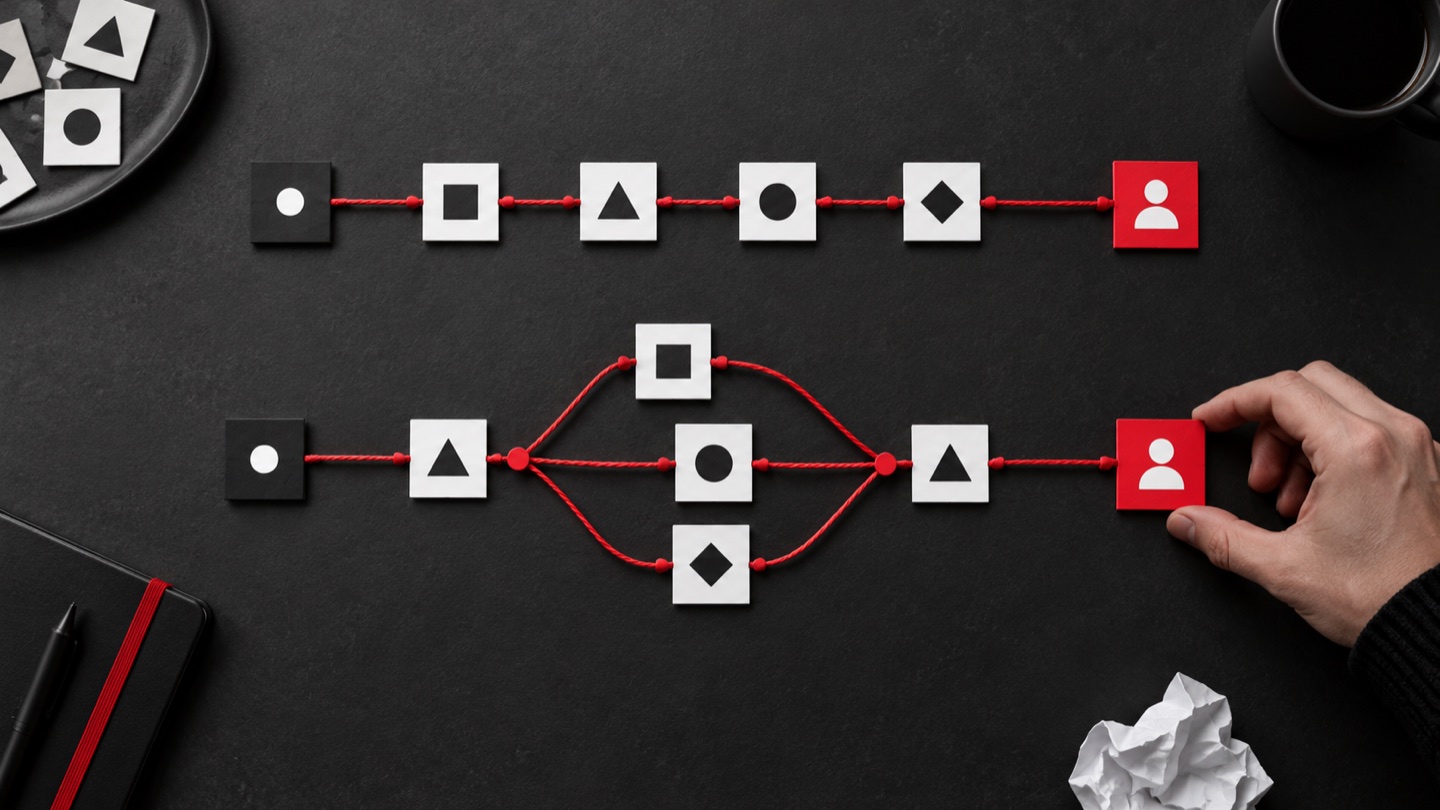
Use a fixed workflow when the steps and rules are known. Consider an agent when the task needs interpretation and flexible tool selection. In either case, define permissions, evaluation, recovery, and a human owner.
Write down a complete task
Name the event that starts the work, the information it needs, the systems involved, and the result that counts as complete. “Prepare a support reply using the current policy” is a workable task. “Run support with AI” is not yet a scope.
Include exceptions. Missing records, contradictory documents, unavailable tools, and duplicate requests often determine how the system should be designed.
Keep predictable work predictable
Routing a form to a known team or checking a required field usually needs straightforward software. An AI step can help interpret free text, summarize a document, or draft a response within that workflow.
An agent becomes useful when the path depends on what it discovers, such as selecting among approved research tools. That flexibility should earn its extra complexity.
Request a callTreat tool access as a product decision
Separate reading from writing. An agent may be allowed to retrieve records and prepare an update while a staff member approves the change. Give each tool only the permissions it needs.
Test whether the system asks for missing details, respects access boundaries, and stops when a request is outside its scope. A confident answer is not evidence of a completed action.
Evaluate before widening access
Use representative examples with expected outcomes. Measure successful completion, incorrect actions, review time, latency, and operating cost. Include failure and recovery cases.
Start with a limited group and an owner who can review failures and roll back changes. The next release should follow observed behavior.
Explore AI agent development services or more Redko guides.